Source IP68 Digital Dissolved Oxygen Meter for Water, Lab, and Industry
Find 30 options for the ip68 digital dissolved oxygen meter suitable for water quality testing, laboratory analysis, and industrial monitoring. Compare specifications like measuring range, accuracy, and certifications from verified suppliers in China.
Key considerations
Products List




Comprehensive Sourcing Guide
Strategic Sourcing Guide for IP68 Digital Dissolved Oxygen Meters
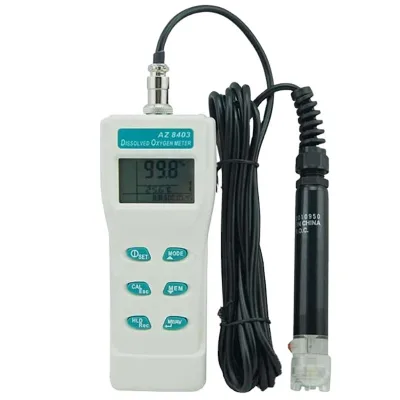
Selecting the right digital dissolved oxygen (DO) meter is a critical decision for industries ranging from wastewater treatment to aquaculture and pharmaceutical manufacturing. The core requirement for many of these applications is a device capable of withstanding harsh environments, which is where the IP68 rating becomes a non-negotiable specification. An IP68 rating indicates that the instrument is dust-tight and can be continuously immersed in water under conditions specified by the manufacturer, ensuring operational continuity even during accidental submersion or in permanently wet environments. This guide provides a structured approach to evaluating suppliers and products, focusing on verified technical attributes, compliance frameworks, and procurement logistics derived from current market data.
Understanding Technical Specifications and Measurement Capabilities
When evaluating a digital dissolved oxygen meter, buyers must look beyond the basic IP rating to the core measurement parameters that define accuracy and utility. The device's ability to provide reliable data depends heavily on its measuring range, resolution, and accuracy specifications. In the current market, high-performance units often feature a measuring range capable of covering both low and high saturation levels, such as 0.00 to 19.99 mg/L for concentration and 0.0 to 199.9% for saturation. This dual-range capability allows the instrument to handle diverse scenarios, from oxygen-depleted water bodies to highly aerated systems.
Resolution is another critical technical factor. A standard for precision instruments in this category is a resolution of 0.01 mg/L or 0.01%, ensuring that minute changes in oxygen levels are captured and recorded. Accuracy is typically expressed as a percentage of the full scale (F.S.), with reliable units offering an accuracy of ±1.5% F.S. This level of precision is essential for process control where deviations can lead to significant operational inefficiencies or product quality issues.
Temperature compensation is equally vital, as dissolved oxygen levels are highly sensitive to temperature fluctuations. Effective meters include automatic temperature compensation (ATC) systems that function within a broad range, such as 0°C to 60°C. This ensures that readings remain valid across varying environmental conditions without manual correction. Furthermore, the output signal capability, such as a standard 4-20mA analog signal, allows for seamless integration with existing control systems, PLCs, and data logging infrastructure.
| Feature Category | Critical Specification | Typical Market Standard |
|---|---|---|
| IP Rating | IP68 (Dust-tight, continuous immersion) | Required for wet environments |
| Measuring Range | 0.00 | Standard for general and industrial use |
| Resolution | 0.01 mg/L; 0.01% | Essential for process monitoring |
| Accuracy | ±1.5% F.S. | Industry benchmark for reliability |
| Temp Compensation | 0~60°C | Required for variable environments |
| Output Signal | 4-20mA | Standard for industrial integration |
Compliance and Certification Verification
In the B2B procurement landscape, compliance is not merely a formality but a prerequisite for market access and operational safety. Buyers must verify that the supplier provides documentation for recognized international certifications. The most common certifications observed in this sector include CE, RoHS, CCC, ISO, UL, and BV. These certifications indicate that the product meets specific safety, electromagnetic compatibility, and environmental standards.
The CE mark signifies conformity with health, safety, and environmental protection standards for products sold within the European Economic Area. RoHS compliance ensures that the device does not contain hazardous substances like lead or mercury, which is crucial for environmental regulations. For products originating from China, the CCC (China Compulsory Certification) is often a mandatory requirement for domestic sale and indicates adherence to national safety standards. Additionally, ISO certifications, such as ISO 9001 for quality management, provide assurance that the manufacturer follows consistent production processes.
It is important to note that while many suppliers list these certifications, buyers should request valid certificates of conformity for the specific model being purchased. The presence of certifications like SGS or FCC further validates the product's electromagnetic compatibility and general safety. However, buyers should treat these as observations of the supplier's portfolio rather than automatic guarantees for every unit unless explicitly stated in the contract.
Cost Drivers and Pricing Structures
The price of a digital dissolved oxygen meter is influenced by several factors, including the complexity of the sensor technology, the durability of the housing, and the included accessories. The observed market price range for these instruments is broad, spanning from $1 to $10,000 USD. This variance reflects the difference between basic handheld units and sophisticated, panel-mounted industrial controllers with advanced data logging and communication capabilities.
A significant cost driver is the customization level. While some products are available as non-customized, standard units, others offer customization options for specific mounting dimensions, output signals, or sensor configurations. Customization typically increases the unit price and may affect the lead time. The Minimum Order Quantity (MOQ) is another financial consideration, with observed ranges typically between 1 and 9 units. This flexibility allows small businesses to procure single units for testing or pilot projects, while larger enterprises can leverage bulk purchasing for cost efficiency.
Packaging also plays a role in the final cost. Products are often supplied in sturdy boxes or carton boxes designed to protect the instrument during transit. The weight of the unit, which can range from 1 kg to 2 kg, impacts shipping costs, particularly for international orders. Buyers should factor in these logistical costs when calculating the total cost of ownership, rather than focusing solely on the unit price.
Typical Applications and Operational Environments
Digital dissolved oxygen meters with an IP68 rating are designed for a wide array of applications where water quality monitoring is critical. In the wastewater treatment industry, these meters are used to monitor aeration processes, ensuring that bacteria receive sufficient oxygen to break down organic matter. In aquaculture, maintaining optimal dissolved oxygen levels is vital for the health and survival of fish and shellfish, making these meters essential for pond and tank management.
The pharmaceutical and food and beverage industries also rely on DO meters for process water quality control, ensuring that water used in production meets strict purity standards. Additionally, environmental monitoring agencies use these devices to assess the health of natural water bodies, such as rivers and lakes, by measuring oxygen levels that indicate pollution or eutrophication.
The robustness of the IP68 rating makes these instruments suitable for submerged installations, where they can remain in the water for extended periods without damage. This is particularly useful for continuous monitoring applications where manual sampling is impractical. The inclusion of data logging features, such as SD card memory sizes ranging from 8GB to 32GB, allows for long-term data storage and analysis, facilitating trend identification and regulatory reporting.
Supplier Evaluation and Origin Considerations
When evaluating potential suppliers, buyers should consider the geographic origin of the products, as this can influence quality control standards and logistics. The majority of the observed products originate from manufacturing hubs in China, specifically in regions like Qingdao, Shandong Province, and Shanghai. These regions are known for their concentration of industrial electronics and instrumentation manufacturers.
Suppliers from these regions often provide a wide range of models, such as the DO-5510HA, DO-8401, and DOG-2092, each with specific dimensions and features. For instance, some units are designed as portable devices, while others are panel-mounted with specific dimensions like 96x96mm or 146x146mm. Buyers should verify the physical dimensions and hole sizes to ensure compatibility with existing control panels or mounting structures.
It is crucial to assess the supplier's ability to provide technical support and after-sales service. A reputable supplier should be able to offer calibration services, replacement parts, and troubleshooting assistance. The presence of certifications like BV (Bureau Veritas) or UL (Underwriters Laboratories) can serve as indicators of the supplier's commitment to quality and safety, though buyers should verify the validity of these certifications for the specific product line.
Quality Control and Long-Term Procurement Strategy
Ensuring the long-term reliability of dissolved oxygen meters requires a proactive approach to quality control. Buyers should implement a rigorous inspection process that includes verifying the accuracy of the sensor, the integrity of the IP68 sealing, and the functionality of the output signals. Regular calibration is essential to maintain the ±1.5% F.S. accuracy over time, as sensor drift can occur due to exposure to harsh chemicals or biological fouling.
For long-term procurement, establishing a relationship with a supplier that offers consistent quality and reliable lead times is beneficial. The observed lead times and production capacities should be discussed during the negotiation phase to ensure that the supply chain can meet demand fluctuations. Additionally, buyers should consider the availability of spare parts and the ease of maintenance when selecting a model.
The use of standardized dimensions, such as the 96x96mm panel size or the 146x146mm overall dimension, can simplify future replacements and upgrades. By selecting products that adhere to common industry standards, buyers can reduce the risk of obsolescence and ensure compatibility with existing infrastructure. Finally, maintaining detailed records of certifications, test results, and performance data will facilitate audits and compliance checks, ensuring that the procurement process remains transparent and accountable.
FAQs
What certifications do these meters typically have?
These meters typically hold certifications such as CE, RoHS, CCC, ISO, UL, and BV. Buyers should verify specific certificates for the model, as some units also list SGS or FCC compliance for safety and electromagnetic compatibility.
What is the measuring range for concentration and saturation?
The standard measuring range covers 0.00 to 19.99 mg/L for concentration and 0.0 to 199.9% for saturation. This dual-range capability supports diverse applications from oxygen-depleted water to highly aerated systems.
How accurate are these digital dissolved oxygen meters?
Reliable units offer an accuracy of ±1.5% F.S. This precision is essential for process control where deviations can lead to operational inefficiencies or product quality issues in industrial settings.
Can the device handle temperature fluctuations during operation?
Yes, the device includes automatic temperature compensation functioning within a range of 0°C to 60°C. This ensures readings remain valid across varying environmental conditions without requiring manual correction by the operator.
What output signals are available for system integration?
The devices typically provide a standard 4-20mA analog output signal. This allows for seamless integration with existing control systems, PLCs, and data logging infrastructure for continuous monitoring.
Where are these products manufactured?
Most products originate from manufacturing hubs in China, specifically Qingdao, Shandong Province, and Shanghai. Buyers should verify the specific origin for each model to ensure compatibility with local regulations and logistics.
What is the minimum order quantity for these meters?
The observed minimum order quantity ranges from 1 to 9 units. This flexibility allows small businesses to procure single units for testing while larger enterprises can leverage bulk purchasing for cost efficiency.
How much memory capacity do the data loggers have?
The data loggers feature SD card memory sizes ranging from 8GB to 32GB. This capacity allows for long-term data storage and analysis, facilitating trend identification and regulatory reporting.